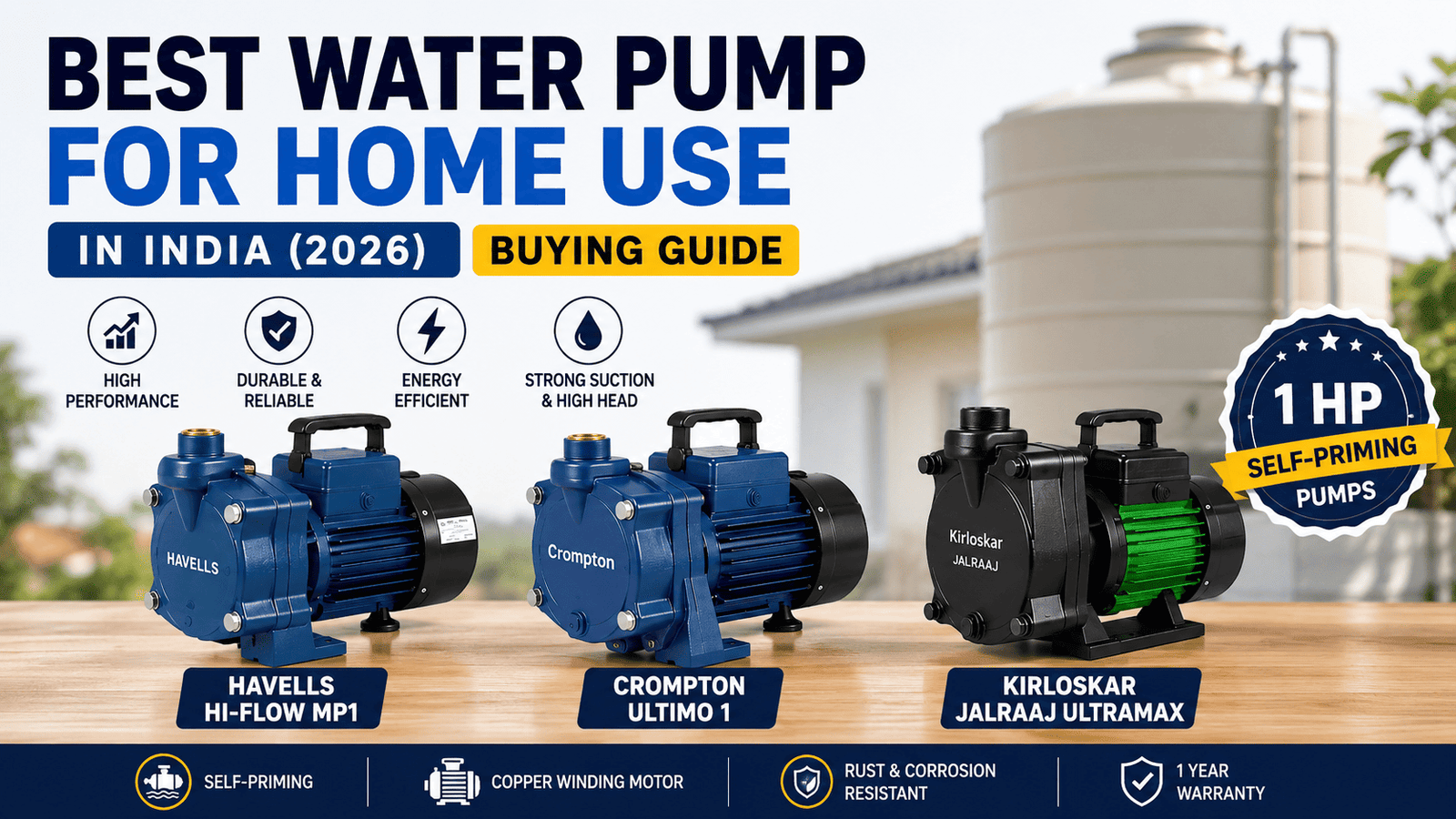
Find the best water pump for home use in India. Compare Crompton ULTIMO I, Havells Pump MP1 and Kirloskar Jalraaj with complete buying guide
If you want your home water pump to deliver water with strong pressure and also push water all the way to a storage tank placed two or even three floors above, then you need to choose your water pump very carefully. Many people simply check the motor’s horsepower (HP)—whether it’s 0.5 HP, 1 HP, or 2 HP. But that’s not enough.
There are several other important factors you should check, such as the suction lift, head range, and discharge rate. These are things that most people are never taught, especially when trying to decide how to choose a water pump for home.
In this Article, we’ll explain everything in a simple way. By the end of this guide, you’ll know exactly what are the features of a good water pump for home. You’ll become confident enough to walk into a shop, read the specifications printed on the box yourself, and identify the best home water pump or the ideal water pump for home without depending on anyone else.
Not only that, but later in this article weI’ll also show you three water pump models that we have selected after extensive research. We personally liked these models, and they’ll give you a clear idea of what kind of water pump you should buy.
Table of Contents
Types of Water Pumps for Home Use
First, let’s quickly understand the different types of water pumps available.
The first type is the submersible pump. You’ve probably heard of these before. They have a cylindrical shape and are installed deep underground. The pump remains completely submerged in water and pushes it up to the surface. If you need to draw water from a significant depth, this is the type of pump that’s used.
Next are compressor pumps, which are designed for surface water applications. They’re suitable for drawing water that’s available near the surface, but they cannot pull water from deep underground.
Then come centrifugal pumps, which are the most common type. In fact, these are the pumps most households use. If you need to draw water from a depth of around 25 feet, centrifugal pumps work well. However, they also have limitations and cannot pull water from very deep sources.
One common issue with centrifugal pumps is that if air enters the pipeline, the pump loses its prime. In that situation, you have to manually add water to the pump to build pressure before it can start drawing water again. Otherwise, it simply won’t work.
To solve this problem, manufacturers developed self-priming regenerative pumps. These are also centrifugal pumps, but they don’t suffer from the air-lock issue. Whether there’s air in the pipeline, water, or a mix of both, you simply switch the pump on and it starts drawing water automatically. That’s why they’re considered one of the recommended water pumps for home use and are among the top water pumps for household use today.
Another type is the inline circulation pump. In many homes, hot and cold water are supplied through separate pipelines. Inline circulation pumps ensure that hot water circulates efficiently throughout the house.
Then there are booster pumps. You’ve probably seen these used in large buildings with multiple bathrooms. Sometimes water pressure is high on one floor but low on another. Booster pumps maintain consistent water pressure across the entire building so that every outlet receives adequate water flow. They are also a great option if you’re looking for the best water pump for home pressure boosting.
These are the main types of water pumps, and each one is designed for a specific purpose.
For most homes, self-priming centrifugal regenerative pumps are the ones commonly used. Since they are also considered the best domestic water pump for many households and one of the most suitable water pumps for residential purposes, that’s what we’ll focus on in this article.
How to Choose the Best Water Pump for Home
Now, when buying a water pump, the first thing you should check is its horsepower (HP).
You’ll commonly find 0.5 HP, 1 HP, and 2 HP models.
If a pump is rated at 2 HP or higher, it’s generally intended for commercial applications.
For normal household use, a 0.5 HP or 1 HP pump is usually more than enough.
So which one should you choose?
The answer is simple.
The higher the horsepower, the more powerful the motor is. A more powerful motor can draw water more efficiently and perform better under demanding conditions.
If your home already has a reliable water supply, then even a 0.5 HP pump will be sufficient.
However, many people have pipelines that are located 20–25 feet away from the water source, and they need to pull water over that distance. In such situations, choosing a 1 HP pump is usually the better option.
But remember, horsepower alone doesn’t tell you how effectively a pump can draw water.
For that, you need to look at another specification called Suction Lift or Suction Head.
This specification is printed on the pump’s packaging. It may be listed in meters—such as 8 or 10 meters—or in feet, like 25 feet or 30 feet.
The suction lift tells you the maximum depth or distance from which the pump can successfully draw water.
Next, you need to check the discharge rate, also known as the flow rate, of the water pump. This tells you how much water the pump can deliver and how quickly it can supply water. The discharge rate is usually measured in liters per hour (LPH), which means the amount of water the pump can deliver in one hour.
On the packaging, you’ll usually see something like 2700 to 500 liters per hour.
You’ll notice two numbers here—2700 and 500.
To understand what these numbers mean, you also need to look at another important specification called the Head Range.
The head range is generally printed as something like 6 to 32 meters.
So, you’ll usually find two values for the flow rate and two values for the head range.
Here’s how they work together.
The lower the height of your overhead water tank, the higher the water flow you’ll get. In other words, if the pump doesn’t have to push water very high, it can deliver a much larger quantity of water.
For example, suppose a pump has a head range of 6 to 32 meters and a flow rate of 2700 to 500 liters per hour.
This means that if your water tank is located at a height of 6 meters, the pump can deliver water at around 2700 liters per hour.
As the tank height increases, the flow rate gradually decreases because the pump has to work harder to lift the water.
So, if your water tank is installed at a height of 32 meters, the same pump will deliver only around 500 liters per hour.
Once you understand these two specifications—head range and flow rate—you’ll immediately know whether the pump can reach your overhead tank and how much water it will be able to deliver at that height.
These are among the most important specifications to check when selecting the best home water pump or the top-rated water pump for home, because they determine the real-world performance of the pump rather than just its horsepower.
So far, we’ve covered the specifications that tell you whether a pump can draw water properly and deliver it efficiently to your overhead tank.
Features of a Good Home Water Pump
Now let’s look at the factors that determine the quality and durability of the motor itself.
The first thing you should check is the motor winding.
Always choose a pump with copper winding instead of aluminum winding. Copper winding offers better durability, better efficiency, and generally lasts longer.
Next, check the impeller.
The impeller can be made from different materials, but if it’s made of brass, that’s considered one of the best options.
Then, look at the material used for the pump’s body.
Manufacturers use different materials, but if the pump has a cast iron body, it’s generally the best choice because of its strength and long life.
Now, it’s important to understand one thing.
These materials don’t necessarily improve the pump’s performance. The performance depends on specifications like horsepower, suction lift, head range, and discharge rate, which we’ve already discussed.
What these materials actually improve is the lifespan of the pump.
A pump with copper winding, a brass impeller, and a cast iron body is likely to last much longer than one made with lower-quality materials. That’s why these are considered some of the features of a good water pump for home, especially if you’re planning a long-term investment.
Another thing you should check is the pipe size compatibility.
Homes use different plumbing sizes. Some have ½-inch pipes, others have ¾-inch, 1-inch, or even larger pipes.
Similarly, water pumps are available for different pipe sizes.
Many plumbers may tell you not to worry about this because they can simply install a reducer and make any pump fit.
However, my recommendation is different.
If you’re getting a pump that matches the pipe size already installed in your home, then always choose the pump that is designed for that pipe size instead of relying on reducers. This helps maintain better water flow and makes the installation more efficient.
If you choose a good brand, you’ll often get some additional features as well.
For example, many premium models include an auto cut-off or dry-run protection feature.
This means that if there’s no water available in the pipeline and the motor starts running dry, it will automatically switch itself off instead of continuing to run without water.
This is a very useful feature because it helps protect the motor from damage and increases its lifespan. If you’re wondering are there energy-efficient water pumps for home use?, many modern branded pumps not only include dry-run protection but are also designed to consume electricity more efficiently than older models.
Finally, don’t forget to check the warranty.
Most water pumps come with a one-year warranty, although some brands may offer longer coverage.
Also, make sure the brand has a service center near your location.
One more thing that’s often overlooked is the availability of spare parts.
If you buy a pump from an unknown local brand, it may work well initially. But if it develops a fault a few years later, finding replacement parts can become difficult.
With reputed brands, spare parts are generally available even after many years, making maintenance much easier.
These are all the important points you should check before buying a water pump.
By now, we hope you’ve become confident enough to understand the specifications on your own and choose the ideal water pump for home without depending entirely on a salesperson.
Now, let’s move on to three water pump models that I researched and personally found to be excellent options.
Best Water Pumps for Home Use in India (2026)
Now, let me show you three water pump models that we have researched and personally found to be excellent choices. If you’re wondering what is the best water pump for home use in India?, these models are among the most reliable options available. They also give you a good idea of how much does a good water pump cost in India?, depending on your budget and requirements.
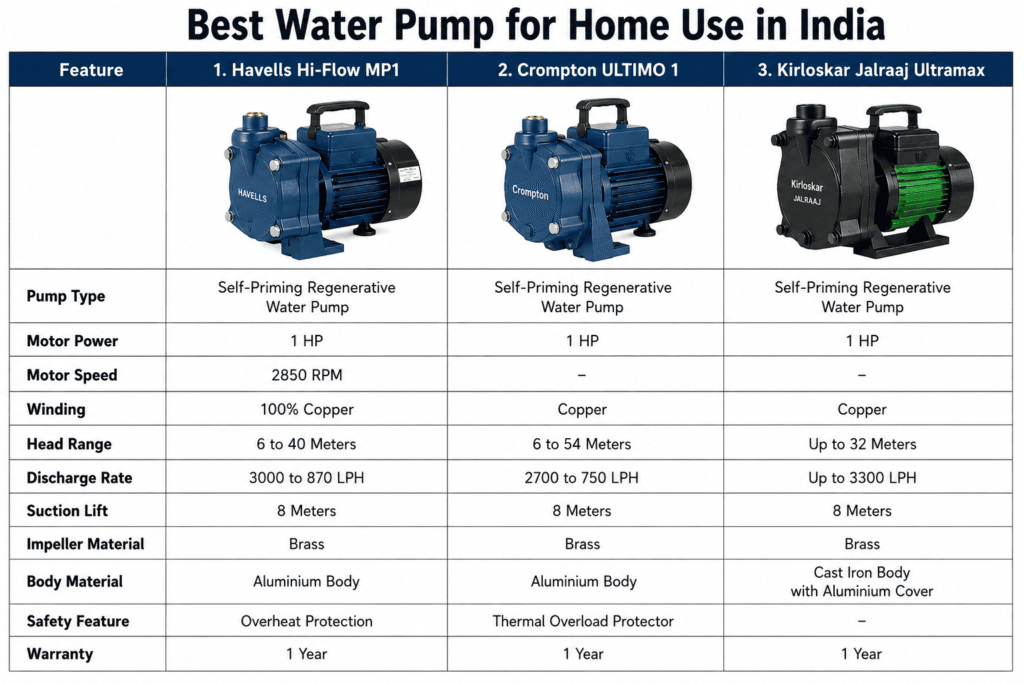
Havells Hi-Flow MP1
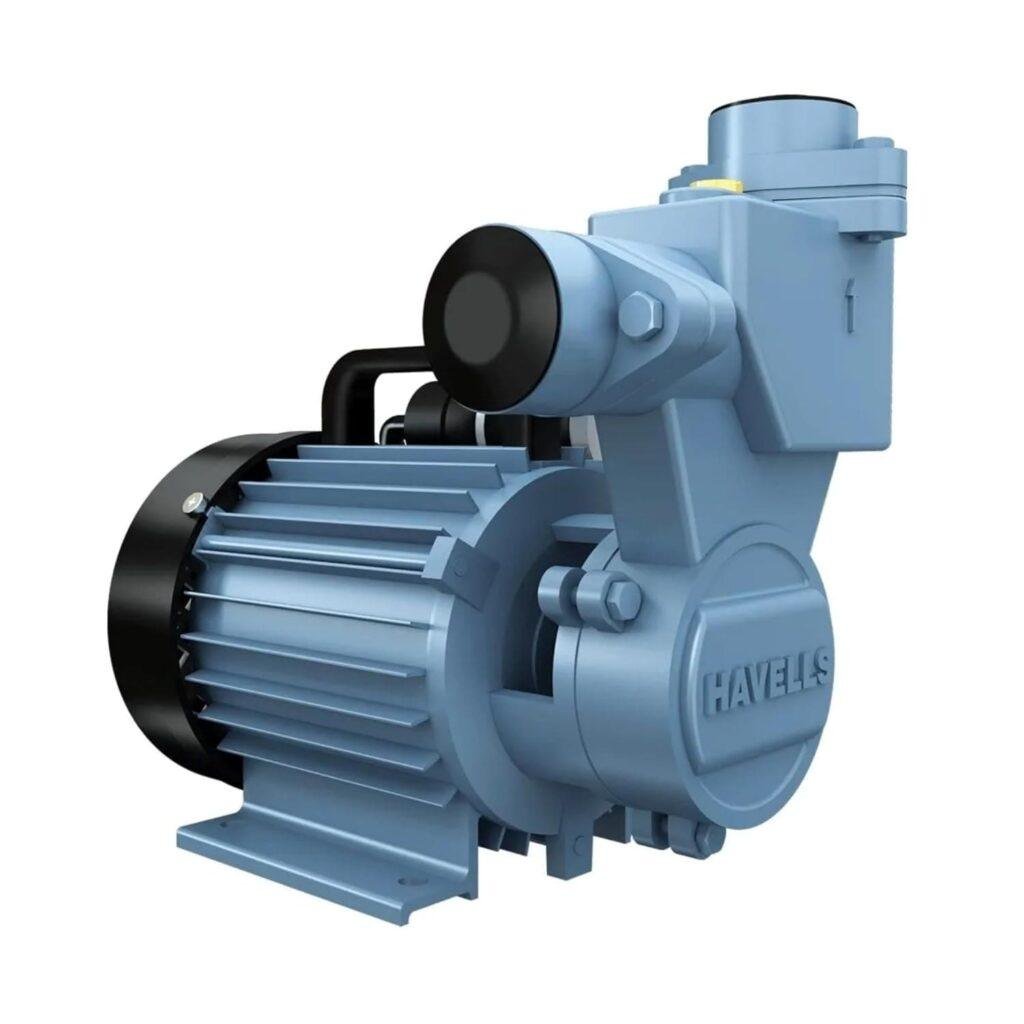
The first model is the Havells Hi-Flow MP1.
- This is a self-priming regenerative water pump, which means even if there’s air trapped inside the pipeline, the pump can still start drawing water easily without manual priming.
- It comes with a 1 HP motor running at 2850 RPM.
- The motor uses 100% copper winding, which is excellent for durability and long-term performance.
- The head range is 6 to 40 meters, which means it can easily push water even if your overhead tank is installed as high as 40 meters.
- The discharge rate ranges from 3000 to 870 liters per hour, depending on the height at which the water is being delivered.
- The suction lift is 8 meters, making it a great choice if you need to draw water from a source located up to 8 meters below the pump.
- It also comes with a brass impeller, a aluminium body, and a 1-year warranty.
This model has received very positive feedback from customers and is considered one of the top-rated water pumps for home. Thousands of buyers have purchased it, and it has earned strong ratings thanks to its reliable performance.
Crompton ULTIMO 1 Water Pump
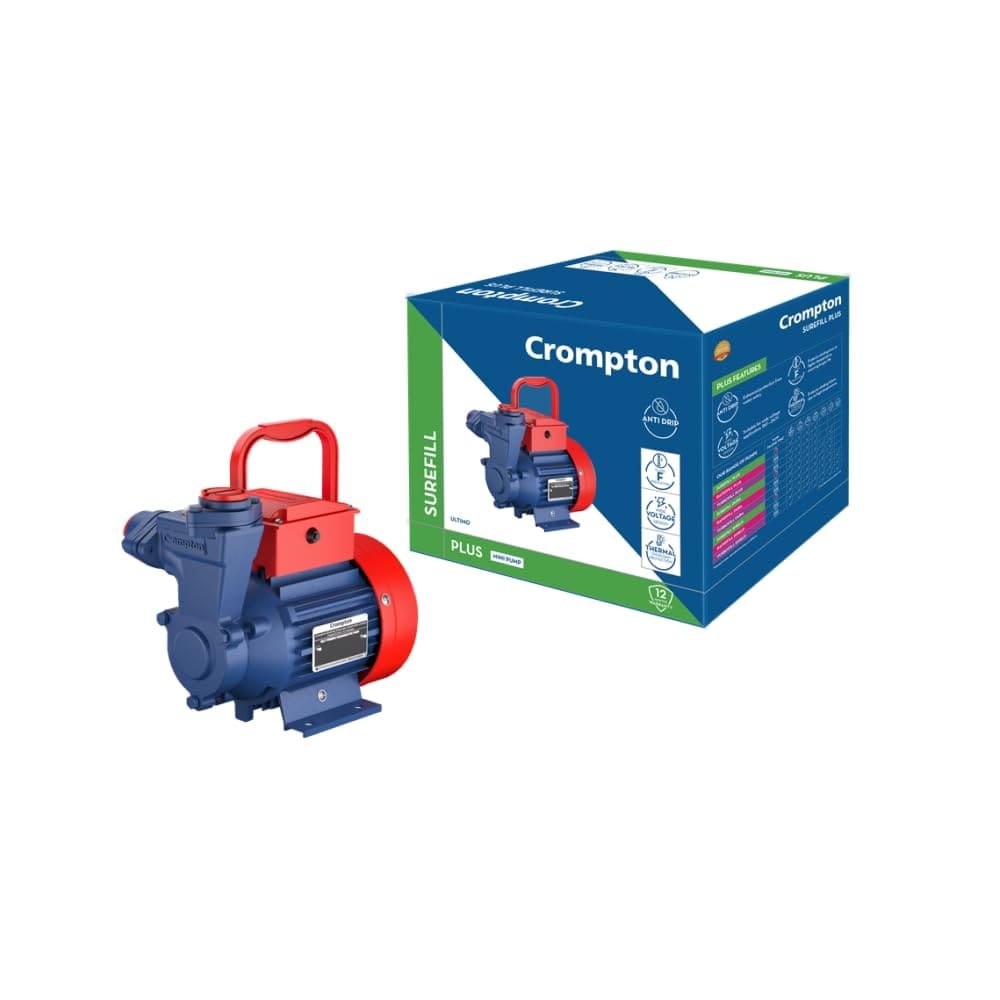
The second model is the Crompton ULTIMO 1 Water Pump.
- This is a self-priming regenerative water pump.
- It comes with a 1 HP motor.
- The motor also features copper winding, ensuring better durability and efficiency.
- Its head range is 6 to 54 meters.
- The discharge rate ranges from 2700 to 750 liters per hour.
- It also provides an 8-meter suction lift, making it suitable for most household water supply systems.
- The pump includes a brass impeller, a aluminium body.
- It has, an additional thermal overload protector, this safety feature automatically switches the motor off if it becomes too hot after prolonged use, helping prevent overheating and protecting the motor from damage.
- It also comes with a 1-year warranty.
This is one of the highest-selling water pump models online because it offers a great balance between price and performance. Many customers prefer it because it delivers reliable performance while remaining budget-friendly, making it one of the best domestic water pumps for many Indian households.
Kirloskar Jalraaj Ultramax Water Pump
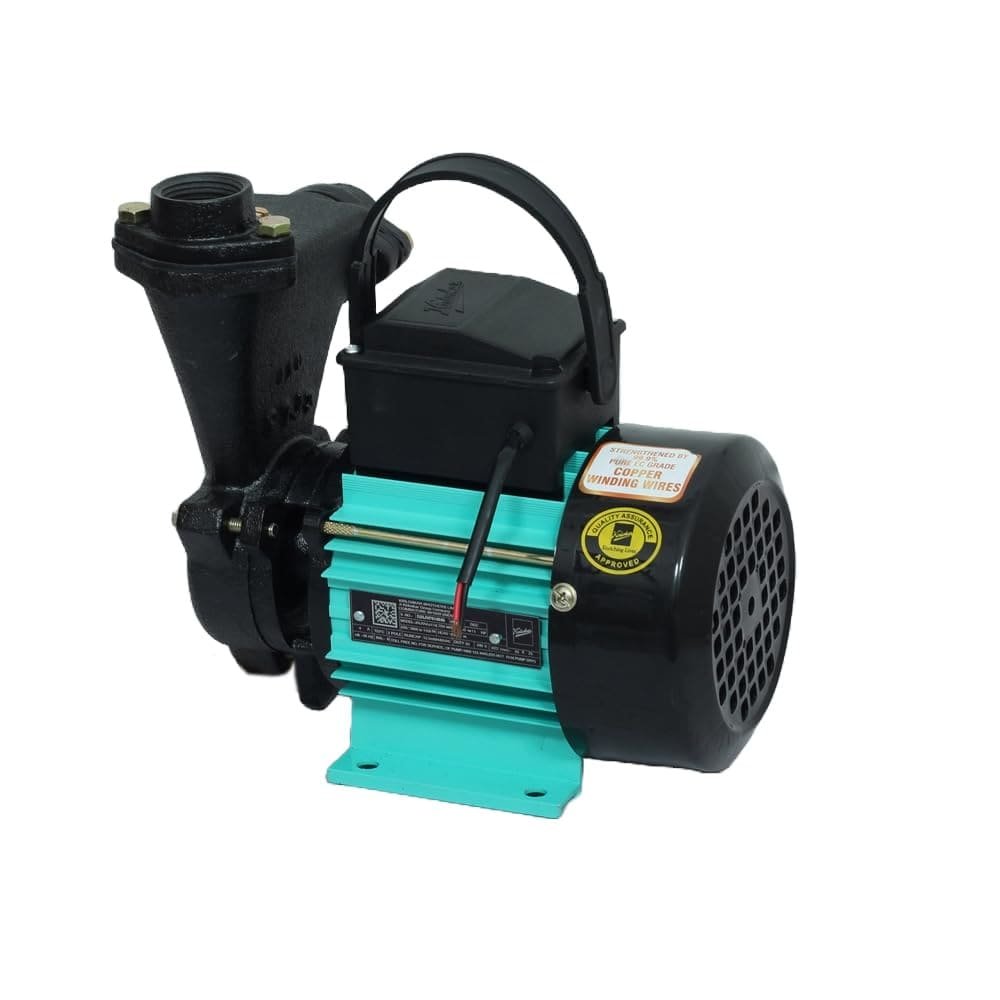
The third model on the list is Kirloskar Jalraaj Ultramax Water Pump
- This is also a 1 HP water pump equipped with a copper winding motor.
- The head range is upto 32 meters.
- Its discharge rate is upto 3300 LPH.
- The suction lift remains 8 meters, just like the previous two models.
- It also comes with a brass impeller.
- However it comes with cast iron body, with aluminium cover.
- It also includes a 1-year warranty.
It can also work well as the best water pump for home gardening if your water source and pressure requirements are within its operating range.
These are the three water pumps that we wanted to recommend.
The specifications we shared for each of these models are printed directly on their packaging.
So, whether you buy a pump online or visit a local store, you’ll find the same information printed on the box.
Now you don’t have to depend entirely on the shopkeeper or anyone else’s advice.
Simply check the horsepower, suction lift, head range, discharge rate, motor winding, impeller material, body material, warranty, and other specifications yourself.
Once you compare these details, you’ll easily be able to identify the best residential water pump or the ideal water pump for home based on your own requirements rather than just buying whatever someone recommends.
Final Buying Tips Before Choosing a Water Pump
So, these are the key things you should always check before buying a water pump. Whether you’re shopping online or visiting a local store, comparing these specifications will help you make a much better decision.
I hope this article has given you valuable information and made it easier to understand how to choose a water pump for home. Instead of focusing only on horsepower, you now know how to compare suction lift, head range, discharge rate, build quality, warranty, and other important factors before making a purchase.
This approach will help you choose the best home water pump, whether you’re looking for water pumps for residential purposes, a top water pump for household use, or simply the best domestic water pump for your family’s daily needs.
If your priority is maintaining strong water pressure throughout your home, you now also know what to look for in the best water pump for home pressure boosting. And if you need a pump for watering your lawn or plants, the same specifications can help you select the best water pump for home gardening as well.
By understanding these technical details, you’ll also have a much better answer to common questions like:
- What is the best water pump for home use in India?
- What are the features of a good water pump for home?
- Are there energy-efficient water pumps for home use?
- How much does a good water pump cost in India?
The right answer always depends on your home’s water source, tank height, pressure requirements, and budget—not just the brand name or the motor’s HP.
We genuinely hope you found this article useful and informative. I tried my best to explain everything in a simple and practical way so that anyone can confidently choose the right water pump.
If this article helped you, please give it a Like and share it with anyone who is planning to buy a new water pump. It might save them from making the wrong purchase.
FAQ
What is the best water pump for home use in India?
For most homes, a 1 HP water pump from Havells, Crompton, or Kirloskar is a reliable choice, offering good performance, durability, and value for money.
How do I choose a water pump for my home?
Check the pump’s horsepower (HP), suction lift, head range, discharge rate, motor winding (preferably copper), impeller material, warranty, and service support before buying.
Are energy-efficient water pumps worth buying?
Yes. Energy-efficient water pumps with 100% copper windings and 1 HP or 0.5 HP motors can typically save 10–30% electricity compared to lower-efficiency models. Features like thermal overload protection, dry-run protection, and 2800–2900 RPM motors help maintain performance while reducing power consumption and extending the motor’s lifespan.
