
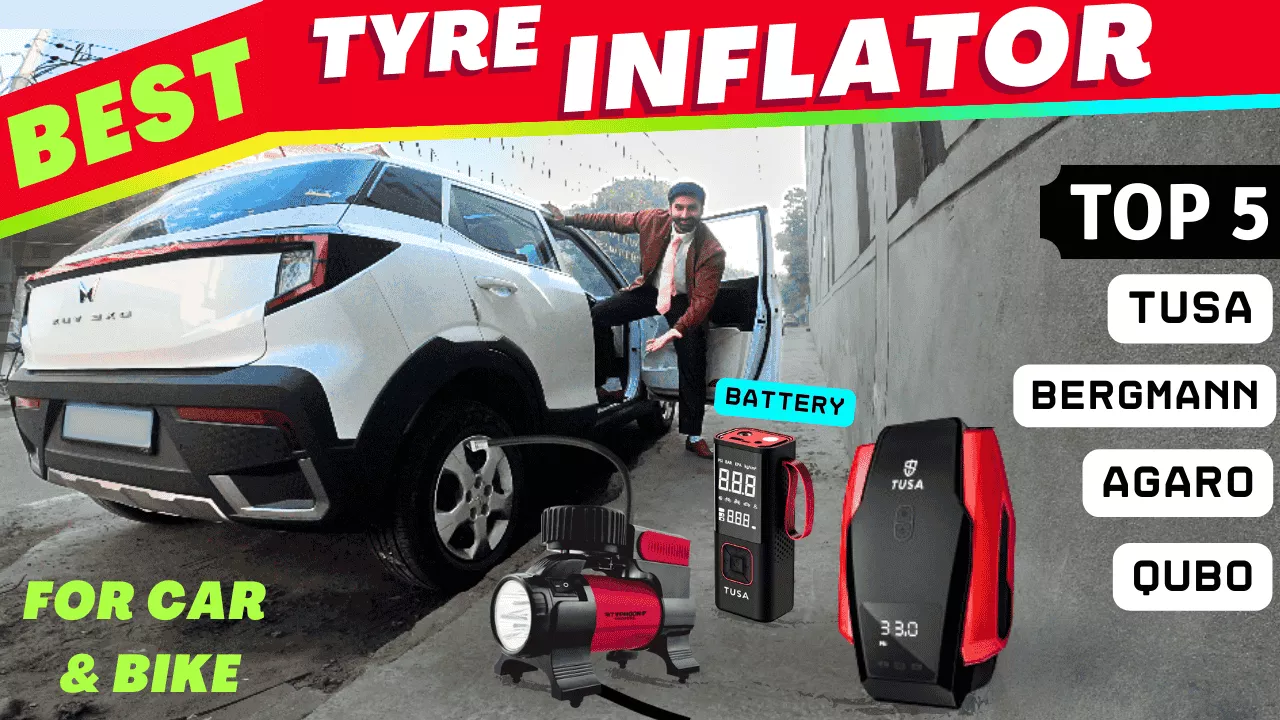
Car Tyre Inflator reviews, top portable air compressors in India, from brands like tusa, agaro, Qubo, Bergmann. Tyre inflators with battery included.
Car Tyre Inflator Comparison Chart
AGARO TI2157 (AC+DC) | TUSA 12V Car Inflator | Bergmann Typhoon BCT-150D | Qubo | TUSA Cordless | |
Best Car Tyre Inflator |  |  |  |  |  |
Power Type | 12V + 230V AC | 12V Socket | 12V Socket | Battery (5200 mAh) + 12V | Battery (6000 mAh) + 12V |
PSI | Up to 150 PSI | Up to 150 PSI | Up to 150 PSI | Up to 150 PSI | Up to 150 PSI |
Wattage / Motor | 120W / 35 LPM | ____ | 150W pure copper motor | _____ | _____ |
Cable Length | 4m cord + 75cm hose | 3.7m cable | 3m cord | Cordless + 12V cable | Cordless + 12V cable |
Inflation Speed | Fast (35 L/min airflow) | Flat to 30 PSI in <4 mins | 0–30 PSI in ~2 mins (fast) | Very fast inflation | 20→33 PSI in 3 mins |
LED Light | Yes | Yes | Yes | Yes + SOS | Yes (3 modes: flash/alarm/SOS) |
Accessories Included | 4 nozzles, carry bag, AC plug, DC plug | Nozzle set included | Braided hose, extra fuse, multi-nozzles, storage bag | 3 nozzles | Nozzle kit included |
Special Features | Digital display, AC+DC dual operation | Auto shut-off, long reach, simple operation | Full metal body, anti-vibration feet, heavy-duty build | USB powerbank function | 2× faster inflation, largest battery, enhanced display |
Warranty | 1 Year | 1 Year | 1 Year | 1 Year | 6 months |
Current Price | |||||
Table of Contents
Top 5 Car Tyre Inflator Pro’s – Con’s
No 5: Bergmann Typhoon Car Tyre Inflator
Pros |
|
Cons |
|
No 4: TUSA Car Tyre Inflator
Pros |
|
Cons |
|
No 3: AGARO Car Tyre Inflator
Pros |
|
Cons |
|
No 2: Qubo Digital Car Tyre Inflator
Pros |
|
Cons |
|
No 1: TUSA Cordless Car Tyre Inflator
Pros |
|
Cons |
|
Car Tyre Inflator Buying Guide
Why a Tyre Inflator is Essential
The modern Indian driver faces unique challenges that make a Portable Car Tyre Inflator an absolute necessity, not just a gadget. From the unpredictable surfaces of city roads during the monsoon to long, demanding highway stretches, maintaining optimal tyre pressure is a matter of safety, cost, and convenience.
Other factors that makes Tyre Inflator very Important
- The Pothole Factor: Rough roads and frequent potholes can cause sudden, sharp pressure drops. If you have a tubeless tyre, a quick top-up from your personal Car Air Pump is often the difference between driving to the nearest puncture-wala and being stranded in traffic.
- Unreliable Petrol Pump Gauges: Many Indian drivers are aware that the gauges at local petrol pumps can be highly inaccurate or improperly calibrated. The only way to ensure your tyres have the manufacturer-recommended PSI is by owning and using a dependable, digital device.
- Temperature Extremes: The scorching Indian summer and the sudden dip in winter temperatures cause the air inside your tyres to expand and contract dramatically. Regular, at-home pressure checks are non-negotiable for safety and tyre longevity.
- The Convenience of Time: Waiting in queue at a fuel station just for a two-minute air fill is frustrating. Owning a portable inflator saves time and lets you check pressure first thing in the morning when tyres are cold, which is the only time an accurate reading can be taken.
Car Tyre Inflator – 10 Critical Factors to Compare
Moving beyond the basic ‘corded vs. cordless’ debate, here is the in-depth, feature-by-feature comparison that determines the best model for your vehicle and driving style.
1. Power Source: 12V vs. Cordless vs. Hybrid
This is the foundational decision, directly impacting reliability and flexibility.
- 12V Corded Tyre Inflators: The Reliable Workhorse. These plug into the car’s cigarette lighter socket. They offer Maximum Reliability and consistent speed because they draw continuous, robust power directly from your vehicle’s battery. They are recommended for SUV Owners and Highway Travellers seeking raw, dependable power.
- Cordless (Battery-Powered) Air Tyre Inflator: Ultimate Convenience. Running on high-capacity Li-ion batteries (typically 5000-6000mAh), their biggest advantage is portability. They are perfect for Bikers, City Commuters, and Tech Enthusiasts who need quick top-ups without managing wires. However, performance can dip as the battery charge runs low.
- Dual-Mode Hybrid Inflators: The Best of Both Worlds. These combine the freedom of a battery with the assurance of a 12V backup plug, making them a premium choice for Long-Distance Travellers needing maximum safety and flexibility.
2. Maximum PSI Capacity and Wattage (The Power Metrics)
Do not confuse the maximum PSI a unit can produce with the PSI your tyre needs.
- PSI Capacity: A rating of 120 PSI to 150 PSI is the industry standard for reliable consumer-grade Car Tyre Inflators. This high capacity is necessary to efficiently handle a flat tyre and sustain pressure even during heat buildup.
- Motor Wattage: Look for 120W to 150W motors. Higher wattage translates directly to better speed and less strain on the unit during prolonged use, which is critical for longevity in a country with high ambient temperatures.
3. Inflation Speed (The Crucial Emergency Test)
In a roadside emergency, speed saves time and keeps you safe. Look for detailed product specifications. A good Portable Air Pump must fill a standard mid-size car tyre From 0 to 30 PSI in just 2 to 4 minutes. For large SUV tyres, consider heavy-duty models which can cut inflation time in half.
4. Motor Type and Build Quality (The Durability Factor)
Longevity is paramount when dealing with heat and vibration.
- Copper Winding Motor: This is the gold standard. 100% Copper Motors offer superior heat resistance, better efficiency, and a much longer lifespan compared to cheaper aluminum-wound alternatives, making them ideal for sustained use on long journeys.
- Body Material: Metal-bodied inflators (like the Bergmann Typhoon) are inherently superior to plastic ones. They dissipate heat better, are more rugged, and can withstand the bumps and dust of being stored in a car boot.
5. Display and Accuracy (The Digital Advantage)
Accuracy directly affects safety and fuel economy.
- Digital Display: Always choose digital over analog. Digital gauges are precise, easy to read at night (often backlit), and support multiple units (PSI, BAR, KPA, kg/cm2).
- Auto Shut-Off Feature: This is the single most important safety feature. You set the target pressure, start the machine, and it stops automatically when the pressure is reached, preventing over-inflation and freeing you up during a roadside stop.
6. Cable and Hose Length (The Reach Test)
The cable must be at least 3 to 4 meters (10 to 13 feet) long to comfortably reach the rear tyres of a large vehicle. The air hose itself should be made of high-quality, braided rubber or PU material to withstand heat and prevent cracking.
7. Heat Management and Duty Cycle
Good heat management is crucial. Look for models with anti-vibration rubber feet and efficient cooling vents. The Duty Cycle, the time the unit can run continuously before needing a rest, should be at least 10 to 15 minutes for standard use.
Budget Breakdown – Price vs. Performance Tiers
This detailed breakdown helps Indian buyers match high-value features to their budget:
The Essential & Budget-Friendly Range (Approx. ₹1,000 – ₹1,800)
This entry-level price bracket is ideal for the budget-conscious hatchback owner or anyone needing a reliable tool strictly for occasional city top-ups. In this segment, you can expect a Basic Digital or Analog display, typically with a 100-120 PSI capacity. The build quality is usually a plastic body, and inflation speed will be slower, meaning it might take five to seven minutes to inflate a completely flat tyre. Look for models from established budget-friendly brands in this range, ensuring at least a six-month warranty.
The Best Value for Money (Approx. ₹1,800 – ₹3,500)
This is the sweet spot for the majority of Indian drivers, especially Sedan & Mid-Size SUV Owners who seek the best balance of features and value. In this crucial segment, you must prioritize getting a unit with a Digital Display, the Auto Shut-Off mechanism, and a higher 150 PSI capacity. Crucially, you should aim for a model featuring a Copper Motor for durability and better heat handling. The devices in this tier usually come with a longer, more practical cable and hose setup, making them highly effective for routine maintenance and minor emergencies.
The Premium & Heavy-Duty Segment (Approx. ₹3,500 +)
This premium price range caters to Premium SUV Owners, Off-Roaders, and Frequent Long-Distance Travellers who demand maximum power and maximum features. Here, you will find rugged Metal-Bodied Inflators and advanced systems for ultra-fast inflation) or powerful Cordless models with high mAh batteries (4000-6000mAh). Many units in this segment are Dual-Mode (12V + Battery), offering unbeatable assurance. This is also where advanced features like integrated Power Bank or Jump Starter functions are commonly found.
Conclusion: Making Your Final Choice
The decision to buy a Car Tyre Inflator in India should be driven by a non-negotiable commitment to safety and convenience. You are not buying a simple tool; you are investing in independence from unreliable roadside services and protection from unexpected emergencies i.e., car/bike tyre inflator.
Remember to prioritize:
- Digital Display with Auto Shut-Off
- 150 PSI Rating with a Copper Motor
- The right power source (12V for power, Cordless for portability).
By carefully matching these top features and selecting a reliable brand from the market, you will secure the best Portable Air Compressor that ensures peace of mind on every Indian journey.
FAQ
Which is better: Corded or Cordless Car Tyre Inflator?
The 12V Corded Inflator is superior for sheer power and reliability for inflating a flat car tyre quickly. The Cordless model is better for convenience and portability. If budget allows, choose a Dual-Mode Hybrid for the best of both worlds.
Can a tyre inflator damage my car battery?
When using a 12V corded inflator, you should always keep the car engine running during the inflation process. This prevents the inflator from draining your car’s main battery and ensures it gets the necessary power for quick, efficient operation.
What is the maximum PSI needed for my car?
Most passenger cars require pressure between 30-35 PSI. You must always check the sticker located inside the driver’s side door jamb or the owner’s manual for the exact manufacturer-recommended cold tyre pressure. A 150 PSI-rated inflator can handle this pressure easily.
Is an analog gauge accurate enough for Indian roads?
Analog gauges are prone to damage and inaccuracy from vibration and dust. A Digital Tyre Inflator with a guaranteed ±1 PSI accuracy is highly recommended for maintaining precise pressure, which is critical for fuel economy and safety.
